
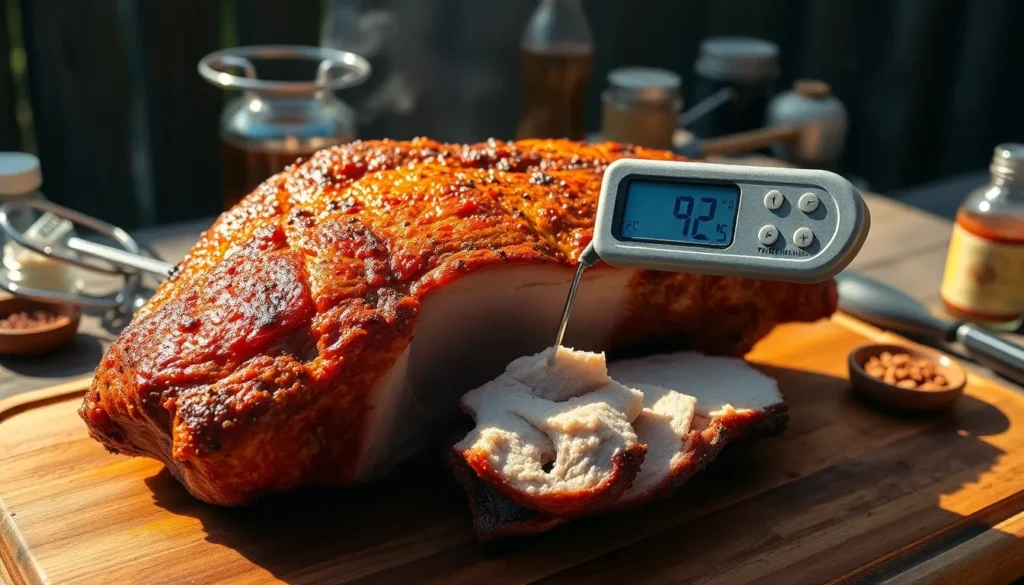
When it comes to barbecue, few things are as mouthwatering as a perfectly cooked pork butt. But let’s face it—getting that internal temperature just right can feel like navigating a culinary minefield. Too low, and you’re serving up a chewy disaster. Too high, and you might as well be serving shoe leather.
Understanding Internal Temp of Pork Butt
Achieving the right internal temperature is crucial when cooking pork butt. The United States Department of Agriculture (USDA) recommends reaching an internal temperature of at least 195°F to 205°F for optimal tenderness. This range allows the collagen within the meat to break down, resulting in a juicy and flavorful final product.
Meat thermometers provide accurate readings, ensuring cooks monitor the temperature effectively. When inserting the thermometer, place it in the thickest part of the meat, avoiding any bone, which can give misleading readings.
Overcooking occurs above 205°F, which can lead to dryness. While some pitmasters advocate for higher temperatures to achieve specific textures, adherence to USDA guidelines promotes food safety and quality.
Each pork butt can weigh between 5 to 10 pounds. Therefore, cooking times can vary significantly. As a general rule, expect to cook the pork butt for approximately 1.5 to 2 hours per pound when smoking at 225°F to 250°F. Planning for the correct internal temperature aids in meal timing.
Letting the pork butt rest for at least 30 minutes after cooking allows juices to redistribute. This practice enhances overall flavor and moisture, resulting in a more enjoyable eating experience.
The internal temperature of pork butt serves as a key indicator of doneness. Understanding this crucial temperature range contributes significantly to barbecue success.
Importance of Internal Temperature
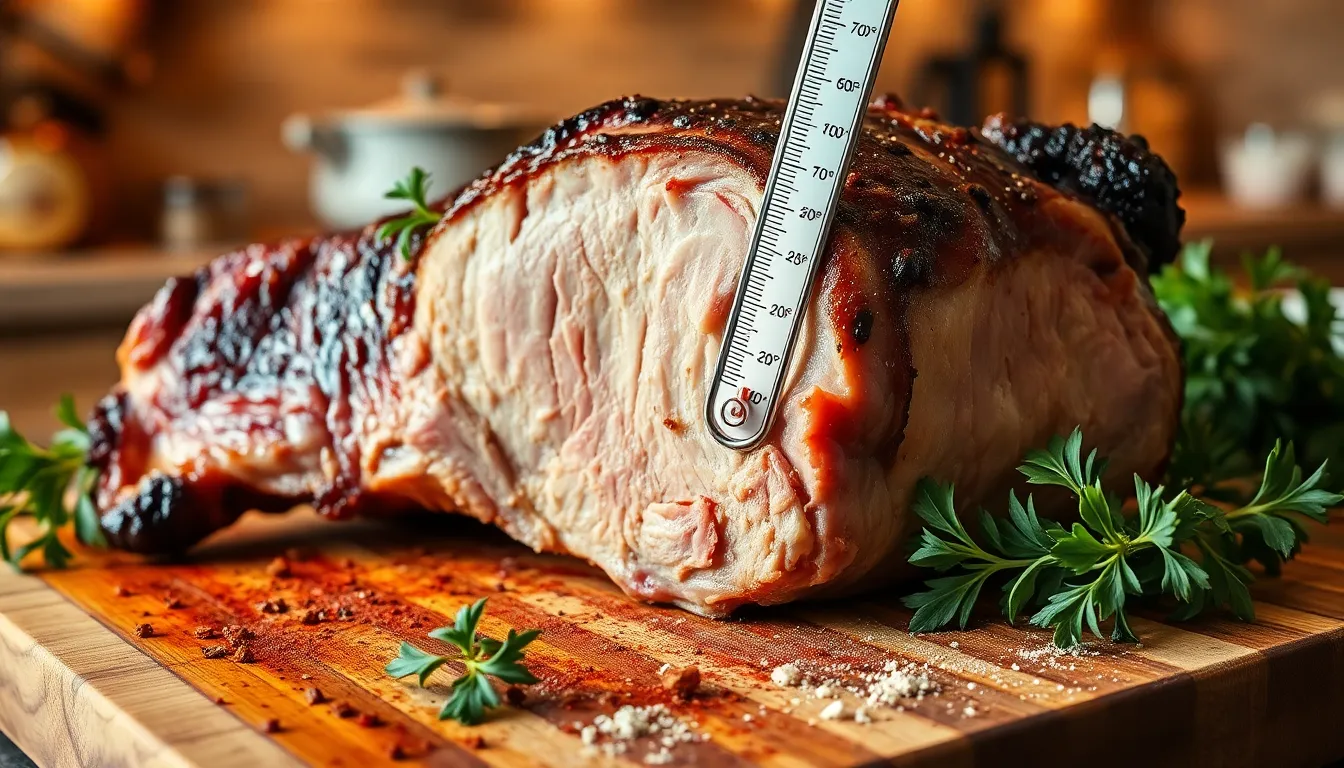
Achieving the correct internal temperature is essential for pork butt preparation. This temperature not only guarantees food safety but also enhances the meat’s texture and flavor.
Food Safety
Food safety stands as a priority when cooking pork butt. The USDA recommends an internal temperature of at least 195°F to 205°F. Reaching this temperature kills harmful bacteria like Salmonella and E. coli, reducing the risk of foodborne illnesses. Utilizing a reliable meat thermometer ensures accurate readings. Insert the thermometer into the thickest part of the meat, steering clear of bone, which can give false results. By adhering to these guidelines, cooks maintain a safe environment for themselves and their guests.
Texture and Flavor
Texture and flavor directly correlate with the internal temperature of pork butt. Cooking pork to the optimal range allows collagen to break down, resulting in a tender and juicy product. At temperatures below 195°F, the meat may become tough and chewy. Many experts advise that the magic happens around 205°F, where pulled pork becomes effortlessly shredable. Proper cooking not only maximizes tenderness but also enhances the meat’s natural flavors. Juiciness increases when pork butt rests after cooking, allowing the juices to redistribute. This resting period is key to achieving an ideal eating experience.
Recommended Internal Temperatures
Achieving the right internal temperature is crucial when cooking pork butt. This ensures both safety and optimal flavor.
For Cooking
Cook pork butt until it reaches an internal temperature of 195°F to 205°F. At this range, collagen breaks down effectively, resulting in tender and juicy meat. Utilizing a meat thermometer helps ensure accuracy; insert it into the thickest part of the meat without touching bone. Some pitmasters prefer cooking at slightly higher temperatures for a crunchy outer layer, but USDA guidelines guarantee safety. Typically, cooking times vary from 1.5 to 2 hours per pound at temperatures between 225°F and 250°F. Checking doneness frequently can prevent overcooking, which may dry the meat.
For Shredding
For easy shredding, let pork butt reach the minimum internal temperature of 195°F before removing it from heat. At this temperature, fibers loosen, allowing for simple shredding with two forks. After cooking, allow the meat to rest for at least 30 minutes; this step lets juices redistribute throughout. Skipping the resting period can lead to dry meat, impacting texture and flavor. While some prefer to shred immediately, waiting enhances the overall eating experience. Always confirm the meat’s temperature for the best results before shredding.
Methods to Measure Internal Temperature
Measuring the internal temperature of pork butt ensures safety and ideal tenderness. Utilizing accurate methods makes a significant difference in the cooking process.
Using a Meat Thermometer
A meat thermometer is the most reliable tool. Insert it into the thickest part of the pork butt, avoiding bones for an accurate reading. Digital meat thermometers provide quick results, while dial options offer a more traditional experience. Both options are effective in ensuring the pork reaches the USDA-recommended internal temperature of 195°F to 205°F. Checking the temperature during cooking helps prevent undercooking or overcooking, leading to better texture and flavor.
Alternative Methods
Thermometers aren’t the only option available. Visual cues serve as an effective alternative. For instance, observing juices can indicate doneness; clear juices signal proper cooking while pink or red juices suggest more time is needed. Additionally, the ‘fork test’ allows cooks to assess tenderness. When a fork easily pulls loose shreds from the meat, it typically signifies readiness. These methods complement traditional thermometers, aiding in ensuring quality and safety throughout the cooking process.
Common Mistakes to Avoid
Avoid the mistake of checking the internal temperature too early during cooking. Measuring too soon can lead to inaccurate readings, causing adjustments that disrupt the cooking process. Insert the meat thermometer in the thickest part of the pork butt, steering clear of the bone, to obtain accurate results.
Neglecting to rest the pork butt after cooking results in loss of juiciness. Resting for at least 30 minutes allows the juices to redistribute, enhancing moisture content and flavor. Choose a warm spot covered with foil for optimal resting conditions.
Skipping the use of a meat thermometer can lead to undercooking or overcooking the meat. Using a quality meat thermometer, whether digital or dial, ensures the pork reaches the USDA-recommended temperature of 195°F to 205°F for ideal tenderness. Understand that internal temperature varies, with thicker cuts potentially requiring additional cooking time.
Assuming all pork butts cook uniformly can lead to uneven results. Weights vary, meaning cooking times typically range from 1.5 to 2 hours per pound at 225°F to 250°F. Emphasizing the need for patience during the cooking process leads to better barbecue outcomes.
Overlooking signs of doneness beyond temperature is a common oversight. Observing the color of the juices and performing the ‘fork test’ can provide additional assurance of tenderness. Combining these methods with accurate temperature readings enhances results.
Achieving the right internal temperature for pork butt is crucial for both safety and flavor. By following USDA guidelines and using a reliable meat thermometer, cooks can ensure their pork butt reaches the ideal range for tenderness and juiciness. The importance of resting the meat after cooking cannot be overstated as it allows flavors to meld and moisture to redistribute.
Avoiding common pitfalls like checking the temperature too early or neglecting to let the meat rest will lead to a more enjoyable barbecue experience. With the right techniques and attention to detail, anyone can master the art of cooking pork butt, resulting in a delicious and satisfying meal.