
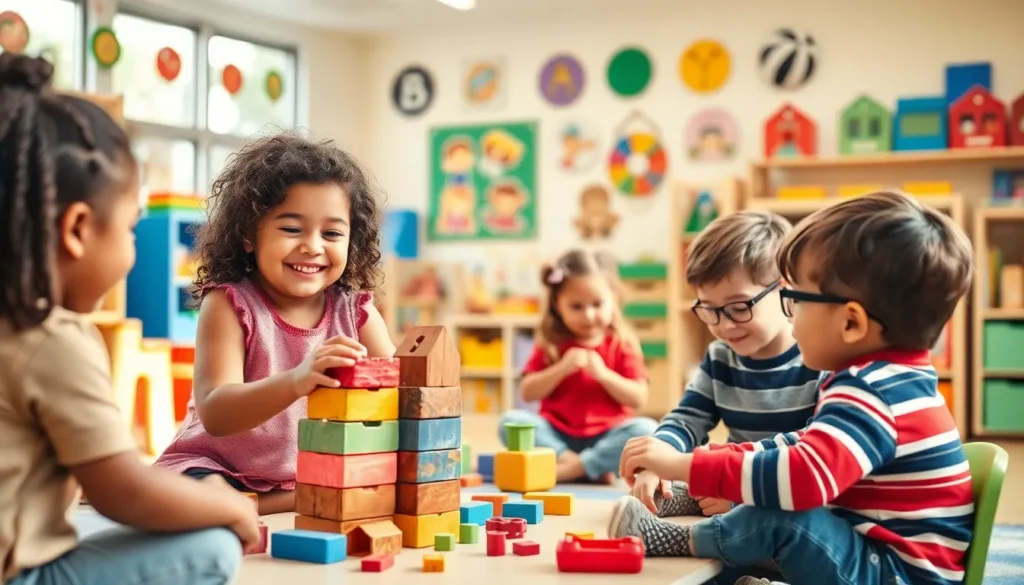
In a world where the phrase “learning is fun” often feels like a cruel joke, play-based learning steps in like a superhero in a cape. Imagine a classroom where kids aren’t just sitting at desks, but diving into adventures that spark their imagination. This innovative approach transforms the mundane into the magical, making education feel less like a chore and more like a thrilling game.
Play-based learning isn’t just about letting kids have a good time; it’s a powerful educational strategy that nurtures creativity, problem-solving, and social skills. When children engage in play, they’re not just having fun—they’re mastering essential life skills without even realizing it. So, buckle up and get ready to explore how this engaging method can revolutionize the way children learn, one playful moment at a time.
Overview of Play-Based Learning
Play-based learning engages children through structured play activities that promote exploration and discovery. This educational approach emphasizes active participation, allowing children to learn by doing, rather than through passive observation. Through play, they develop cognitive, social, and emotional skills essential for everyday life.
Young learners experience real-world scenarios that promote problem-solving and critical thinking. Creative play enables children to express themselves, fostering imagination and independent thought. Various play forms, such as role-playing and construction activities, encourage teamwork and communication skills.
Curriculums incorporating play-based methods support holistic development. Educators create environments where children can choose activities that interest them, leading to increased motivation and enthusiasm for learning. Research shows that integrating play into educational settings improves retention and cognitive flexibility among young learners.
Parents and educators play crucial roles in the implementation of play-based learning. They can facilitate experiences by providing resources and guidance, ensuring children engage with appropriate materials. Continuous support enhances development and nurtures a lifelong love for learning.
Observing children during play reveals valuable insights into their thoughts and behaviors. Such observations help adults tailor activities to meet individual needs and interests, optimizing each child’s learning experience. Collectively, play-based learning transforms traditional education, instilling joy and curiosity in the learning process.
Benefits of Play-Based Learning
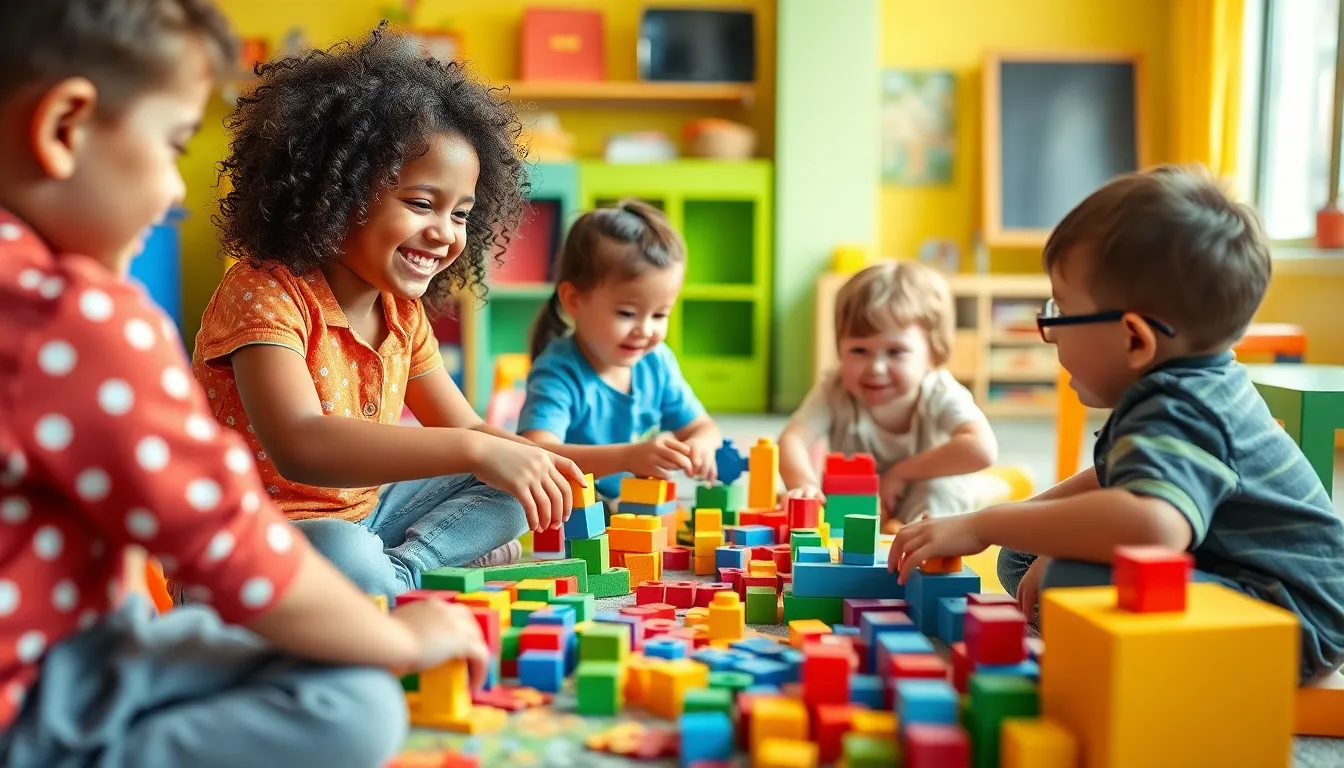
Play-based learning offers numerous advantages, significantly impacting children’s growth and development. Below are two critical areas where play-based approaches excel.
Cognitive Development
Cognitive development thrives in play-based learning environments. Engaging in structured play enhances children’s problem-solving abilities and critical thinking skills. Activities like building blocks or puzzles stimulate reasoning and creative thinking, providing experiential learning opportunities. Research shows that children who participate in play-based programs display improved retention and cognitive flexibility. Diverse learning styles can flourish as children navigate various play scenarios. This method encourages exploration, allowing young learners to connect new concepts with prior knowledge, reinforcing their understanding.
Social Skills Enhancement
Social skills develop organically through play, equipping children to navigate interactions effectively. Shared play experiences foster communication and teamwork, essential for building relationships. Children learn to negotiate roles during role-play, cultivating empathy and emotional intelligence. Engaging in group activities promotes turn-taking and sharing, enhancing cooperation and conflict resolution skills. These encounters create a safe space for experimenting with social dynamics, helping children gain confidence in their interactions. Play-based learning environments significantly contribute to the formation of strong social connections, preparing children for future collaborations.
Implementation Strategies
Effective implementation strategies for play-based learning enhance the educational experience. Educators must create engaging environments where exploration thrives.
Classroom Activities
Engaging classroom activities form the backbone of play-based learning. Teachers can incorporate building blocks, role-playing games, and sensory play to encourage creativity and critical thinking. Activities like storytelling promote language development while fostering imagination. Implementing nature-based play allows children to explore their environment, connecting them with real-world concepts. Regularly rotating materials helps maintain interest, ensuring children remain motivated to participate. With structured yet flexible activities, educators enable children to learn through full engagement.
Parental Involvement
Parental involvement significantly enhances play-based learning effectiveness. Encouraging parents to participate in classroom activities fosters a sense of community. Providing families with resources helps them extend play-based activities at home, reinforcing learning experiences. Regular communication between educators and parents keeps families informed about their child’s progress. Sharing observations about children’s play promotes a collaborative approach, allowing for tailored learning experiences. Involving parents strengthens the educational foundation, enriching children’s lives through active home engagement.
Challenges and Misconceptions
Despite the growing recognition of play-based learning, several misunderstandings persist regarding its effectiveness and implementation.
Common Misunderstandings
Many believe play-based learning lacks structure and educational rigor. This misconception overlooks that play-driven activities are often carefully designed to achieve specific learning outcomes. Some think it’s merely free play without guidance, yet educators facilitate play to promote valuable skills. A significant misunderstanding involves the belief that play is only for younger children. In reality, play-based learning benefits children at various ages, adapting to developmental stages. Others view it as less serious than traditional approaches, failing to recognize that it effectively enhances cognitive and social abilities through engaging methods.
Addressing Concerns
Concerns exist about children not acquiring necessary academic skills in play-based settings. Parents may worry that a focus on play hinders reading or math proficiency. Educators can reassure them with evidence showing that play fosters curiosity and engagement, leading to improved learning outcomes. Teachers also address issues of balancing play with academic standards through structured activities that align with curricular goals. It’s important to note that assessments can observe children’s learning through play, capturing developments often missed in traditional environments. By demonstrating these connections, educators can alleviate doubts while reinforcing play’s crucial role in education.
Play-based learning stands as a powerful catalyst for children’s growth and development. By integrating play into educational settings, it nurtures essential cognitive and social skills while fostering a love for learning. This approach allows children to explore their interests actively and creatively, transforming traditional education into an engaging adventure.
As educators and parents embrace play-based methods, they create environments that motivate and inspire young learners. Addressing misconceptions and providing structured activities ensures that play-based learning meets educational standards while promoting holistic development. Ultimately, this innovative approach not only enhances children’s learning experiences but also equips them with the tools they need for future success.